
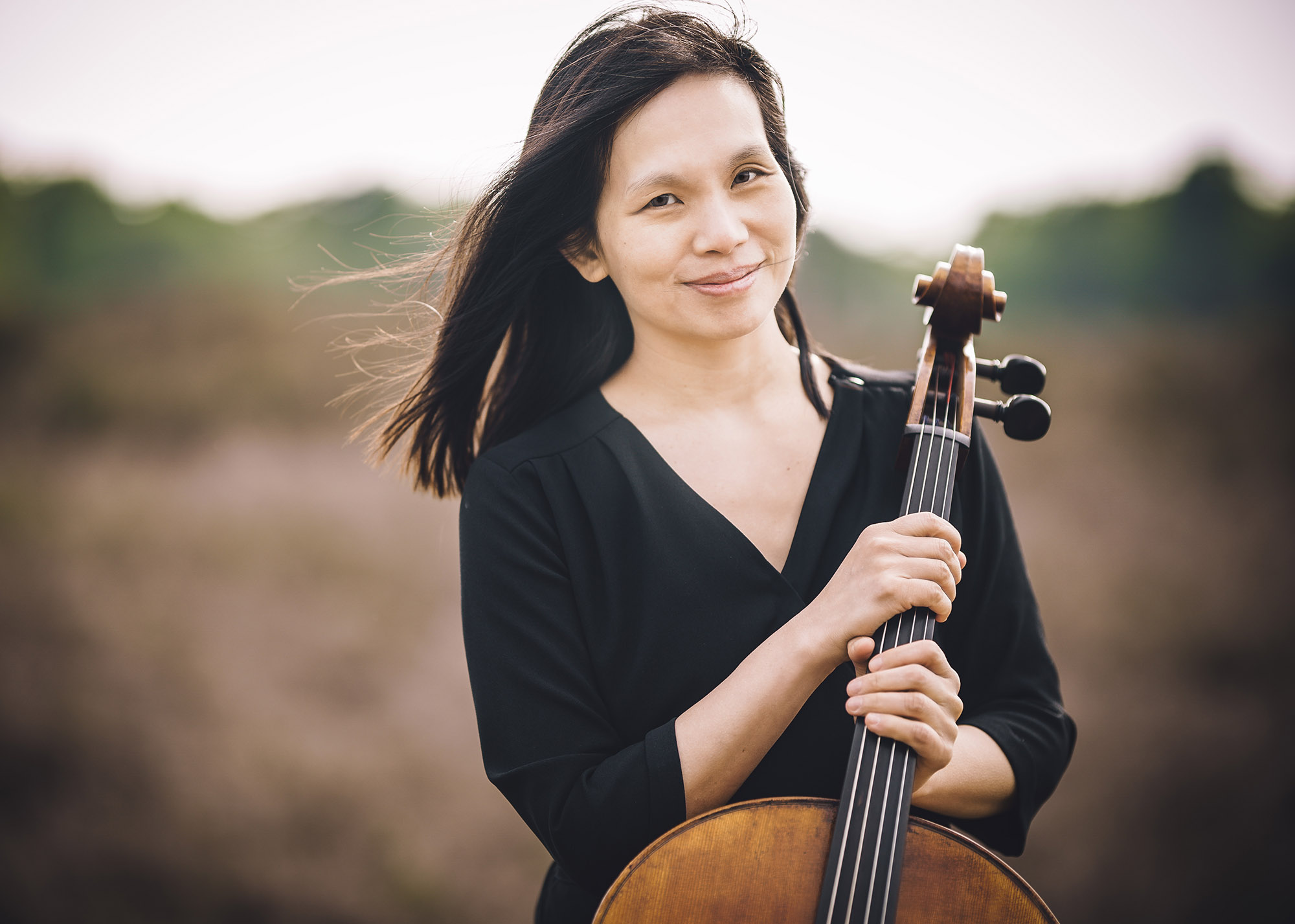
Bringing science to peak performance
An elite cellist-turned-neuroscientist, my goal is to develop innovative research to optimize musicians’ performance
with Yuncong Zhang, violinist Boston Symphony Orchestra
Recorded live in Symphony Hall, Boston – 2022
Current Research & Honors
My current work as a Postdoctoral Fellow with the Tass Lab, located within Stanford Neurosurgery, is dedicated towards identifying the neural and biomechanical circuitry supporting optimal performance in musicians.
This work is generously supported by the Wu Tsai Human Performance Alliance Agility Award. This major funding allows our collaborative team, partnering with the Stanford Faculty of Music Schumann Lab, to dive deep in investigating the extreme human capacities involved in elite musical performance.
🎙️ Featured Interview: Society for Neuroscience
I recently sat down with the Society for Neuroscience (SfN) to share the story of how my background as a performer led me towards scientific insights into how the brain processes sensory feedback for skilled performance.
Read the full Society for Neuroscience interview here
Scientist
My career in research arose from the discovery of a surprising method to help my own performance. I had spent decades searching for a solution to my own impaired hand function, stemming from a childhood spinal cord injury. Dispokinesis addressed musicians’ performance through a novel approach: instead of focusing on muscle output, it concentrated on sensory information received through touch. This focus on touch had a pronounced effect on my playing: my movement felt lighter, less strained, more precise, and easy.
It became my passion to understand the physical mechanisms of this relationship between touch and movement. In 2020, I left my position with the Concertgebouw Orchestra to pursue a PhD at the University of Toronto’s Faculty of Kinesiology. My doctoral research on the role of tactile perception in expert musicians’ performance shed new light on the beneficial role of touch in skilled motor control. Since completing my PhD, my focus has turned towards translating these insights into an evidence-based framework for understanding and training elite performance.
Cellist
Long before entering the laboratory, my understanding of elite musical performance was shaped on the concert stage. Born and raised in California, I received a Bachelor’s Degree in English Literature at Harvard University and studied cello at the Juilliard School and conservatories in Germany and the UK. For decades, I performed across the globe, including as soloist with orchestras such as the San Francisco Symphony and the Boston Pops Orchestra.
From 2010-2020, I was a member of the Concertgebouw Orchestra in Amsterdam. In 2016, I was awarded the Concertgebouw Orchestra’s Prix de Salon, with my prizewinning CD Origins released by Etcetera Records in the fall of 2019.
Teacher
Bridging the roles of research and performer, I began sharing the Dispokinesis approach with colleagues in the Concertgebouw Orchestra and visiting guest artists after earning my Dispokinesis teacher’s certificate from Germany’s Gesellschaft für Dispokinesis. Among the artists I worked with was the eminent conductor Myung-whun Chung, who kindly shared a video statement expressing his gratitude after our training session allowed him to conduct four consecutive concerts completely pain-free.
At the University of Toronto, I brought this method into the classroom, designing a Dispokinesis course for the Faculty of Music’s Bachelor’s and Advanced Certificate students. Teaching 75 musicians across every major instrument group – strings, brass, woodwinds, piano, voice, percussion, and harp – I saw time and again how focus on the body’s sensory system unlocked technical ease. The classroom became a space of regular breakthrough: chronic tension released, arm braces discarded, formerly “impossible” passages suddenly performed fluidly and with ease. Tangible milestones accumulated, with celebrations each time students overcame long-standing performance ceilings to win auditions and competitions.
To bring these insights to the wider musical community, I regularly present my work at international conferences, and mentor students presenting their own research. I also established a continuing education pipeline through the University of Toronto Piano Pedagogy program, guiding advanced students in one-on-one teaching and creating specialized workshops for their peers and the broader community.
Vision
My work as researcher and teacher is driven by a single, shared goal: to equip each musician with the best, evidence-based tools for achieving peak performance.